
What Makes a Roofing Company Citable in AI Search?
Sep 30, 2026


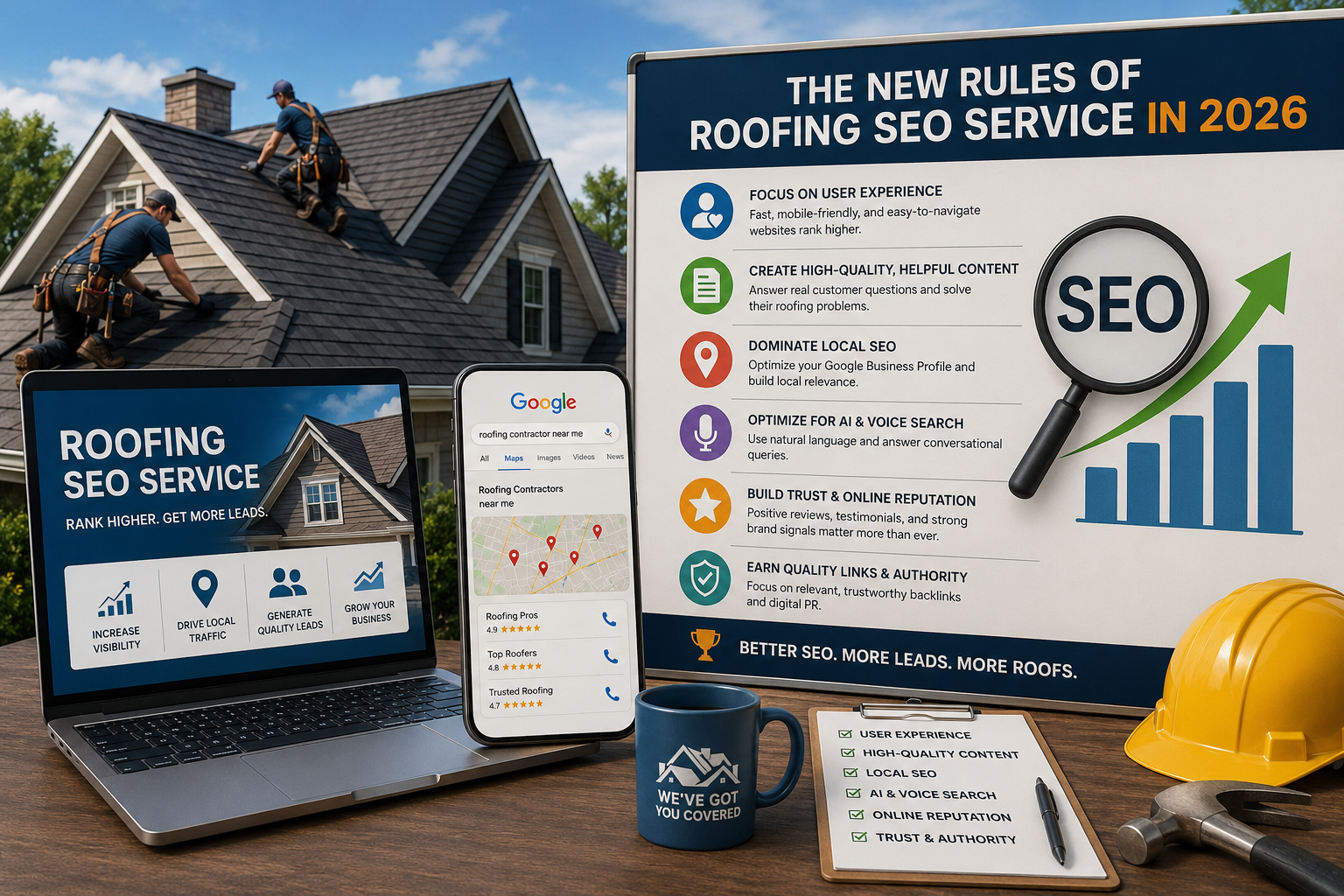
The way homeowners search for roofing companies has changed dramatically over the past few years. Instead of simply typing a few keywords into a search engine, people now ask detailed questions, compare local businesses, read reviews, and often rely on AI-powered search experiences before making a decision. These changes have transformed how roofing companies need to approach online marketing.
If your roofing business still depends on outdated SEO tactics like keyword stuffing, thin content, or building large numbers of low-quality backlinks, you’re likely missing valuable opportunities to attract qualified leads. Search engines have become much better at understanding user intent, evaluating website quality, and recognizing trustworthy businesses. As a result, modern Roofing SEO Service is no longer just about ranking higher—it is about delivering the best possible experience for your potential customers.
Today’s search landscape rewards roofing companies that publish helpful content, demonstrate expertise, maintain technically sound websites, and build a strong local reputation. It also places greater importance on AI-ready content, semantic search, entity optimization, and EEAT (Experience, Expertise, Authoritativeness, and Trustworthiness).
In this guide, you’ll learn the new rules shaping Roofing SEO in 2026, which strategies continue to work, which outdated tactics to avoid, and how you can build a long-term SEO strategy that keeps your roofing business visible across search engines, AI-powered search experiences, voice search, and future search platforms.
Search engines have evolved from simply matching keywords to understanding the meaning behind every search. Their goal is no longer just to show webpages—it is to provide the most accurate, trustworthy, and useful answers to users.
Several major developments have reshaped Roofing SEO Services:
Modern search platforms increasingly generate summarized answers based on trusted sources. Roofing businesses must now create content that is well-structured, factual, and easy for AI systems to understand and reference.
Search engines can now distinguish whether someone wants information, is comparing contractors, or is ready to request a roofing estimate. Your content must align with each stage of the customer journey.
Instead of rewarding pages that repeat keywords, search engines prioritize content that genuinely solves customer problems. Educational resources, guides, FAQs, and real project examples now perform better than generic marketing copy.
Roofing is a location-based service. Search engines increasingly emphasize businesses with strong local signals, verified business information, positive reviews, and community involvement.
Fast-loading pages, mobile-friendly design, secure browsing, and clear navigation are no longer optional. They directly influence both user experience and search visibility.
For years, SEO focused heavily on inserting keywords into page titles, headings, and content. While keywords remain important, they are no longer enough. The real goal is to understand what your potential customer is trying to accomplish.
Ask yourself:
Each search requires different content.
Instead of creating generic pages, build content around specific customer needs.
Examples include:
Every service page should clearly explain the problem, your solution, your experience, and how customers can contact you.
Many homeowners begin their journey with questions.
Examples include:
Publishing educational content helps you build trust before customers are ready to hire.
Search engines increasingly reward websites that demonstrate comprehensive knowledge about a subject rather than publishing isolated articles.
Instead of writing only about your services, develop content clusters covering every major roofing topic.
Important topics include:
When your website consistently answers customer questions across these related topics, search engines recognize your business as an authoritative roofing resource.
For example, your “Roof Replacement” pillar page can internally link to supporting articles such as:
This internal linking structure strengthens topical authority and helps visitors find related information.
Search is no longer limited to traditional blue links. AI-powered search experiences increasingly summarize information from trusted websites to answer users’ questions directly.
To improve your visibility, your content should be structured so both people and AI systems can easily understand it.
Well-organized headings make your content easier to navigate and help AI identify key topics.
Provide concise answers before expanding with additional details. This improves your chances of appearing in featured snippets and AI-generated responses.
For example:
Roofing SEO Service is a specialized digital marketing strategy that improves a roofing company’s visibility in search engines and AI-powered search experiences, helping attract more qualified local leads.
Avoid forcing keywords into every paragraph. Instead, use related terms such as:
This natural language approach helps search engines better understand your content.
Use:
These formats improve readability and make your content easier for AI systems to extract and present.
One of the biggest shifts in Roofing SEO Service is the growing importance of EEAT, which stands for Experience, Expertise, Authoritativeness, and Trustworthiness. Search engines want to recommend businesses that have real-world knowledge, proven experience, and a trustworthy reputation.
For roofing companies, EEAT isn’t just about writing quality content. It’s about proving that you have the skills and experience to complete roofing projects safely and professionally.
Customers want to know they are hiring a contractor with hands-on experience. Showcase your work by including:
Sharing real examples builds confidence and helps search engines recognize your business as an experienced authority.
Explain your team’s qualifications and industry knowledge by highlighting:
An informative “About Us” page and author bios for educational content further strengthen your credibility.
Authority grows over time as your brand earns recognition. You can strengthen it by:
The more trusted sources that reference your business, the stronger your authority becomes.
Trust is essential for both customers and search engines. Improve trust by maintaining:
Trust signals often influence whether a visitor chooses your business over a competitor.
Most homeowners search for roofing companies in their local area. As competition grows, Local Roofing SEO has become one of the most important parts of a successful digital marketing strategy.
Ranking locally requires much more than simply adding your city name to a webpage.
A complete and regularly updated profile improves your chances of appearing in local search results.
Make sure your profile includes:
Your Name, Address, and Phone Number (NAP) should be identical across:
Consistent information strengthens your local authority and reduces confusion for search engines.
If you serve multiple cities, build unique pages for each service area.
Avoid copying the same content across locations. Instead, customize each page with:
Unique location pages provide more value and improve local relevance.
Reviews remain one of the strongest local ranking signals.
After completing a project, encourage satisfied customers to leave honest feedback. Respond professionally to every review, whether positive or negative, to demonstrate your commitment to customer service.
Local partnerships help strengthen your authority. Consider earning links through:
These backlinks reinforce your local presence and credibility.
Even the best content won’t perform well if your website has technical issues. A technically optimized website helps search engines crawl, understand, and index your pages efficiently while providing visitors with a better user experience.
Search engines evaluate how users experience your website.
Focus on:
Compress images, reduce unnecessary scripts, and use reliable hosting to improve performance.
Most roofing searches now happen on mobile devices. Your website should:
A poor mobile experience can lead to higher bounce rates and lost leads.
Security is essential. HTTPS protects visitor data and signals trustworthiness to both users and search engines.
Help search engines access your content by maintaining:
Regularly audit your website to identify crawl errors or indexing issues.
Internal links connect related pages, helping both users and search engines discover more content.
For example:
A well-planned internal linking strategy improves user engagement and topical authority.
Structured data, also known as schema markup, helps search engines understand important information about your business.
Consider implementing schema for:
Structured data can enhance your visibility with rich search results and improve how your content is interpreted.
Modern search engines understand relationships between people, businesses, locations, and topics. This is where Entity SEO plays a major role.
An entity is a clearly identifiable concept, such as:
Instead of relying only on keywords, search engines analyze how these entities connect to understand your business.
Strengthen your brand by ensuring consistency across every online platform.
This includes:
Consistent branding helps search engines confidently recognize your company.
Cover related roofing topics naturally throughout your website. For example, a page about roof replacement can also reference:
These semantic relationships provide additional context and improve topical relevance.
Clearly associate your business with the communities you serve by mentioning:
This helps search engines understand where your services are most relevant and improves local visibility.
One of the biggest differences between average and exceptional Roofing SEO Services in 2026 is the ability to prove real-world experience. Search engines are becoming better at identifying content that reflects genuine expertise rather than generic information.
If your website only contains basic service descriptions, you are missing an opportunity to build trust with both search engines and potential customers.
Document completed roofing projects with details such as:
Including before-and-after photos, when you have permission, adds credibility and helps visitors visualize the quality of your work.
Case studies show how your team solved real roofing challenges. They can include:
Explain the challenge, your solution, and the results. This type of content demonstrates practical experience that generic articles cannot match.
Help homeowners make informed decisions by publishing content about:
Educational content positions your business as a trusted advisor, making customers more likely to contact you when they need roofing services.
SEO no longer depends only on what happens on your website. Search engines also evaluate how your brand is recognized across the web.
A strong online reputation increases trust, improves visibility, and supports long-term rankings.
Look for opportunities to have your roofing business featured on:
Even unlinked brand mentions can contribute to your online authority.
Writing helpful articles for reputable home improvement or construction websites can:
Focus on providing useful information rather than promotional content.
Partner with complementary businesses such as:
These partnerships can lead to referrals, local mentions, and collaborative marketing opportunities.
Monitor your online reviews regularly and respond professionally. Thank satisfied customers and address concerns promptly when issues arise.
A positive reputation influences both search visibility and customer trust.
Many roofing companies judge SEO success only by keyword rankings. While rankings matter, they do not always reflect business growth.
A successful Roofing SEO Service should focus on generating qualified leads and increasing revenue.
Measure performance using indicators such as:
These metrics provide a clearer picture of your return on investment than rankings alone.
Regularly review your website analytics to identify:
Updating successful content and improving weaker pages helps maintain steady growth.
Even experienced roofing companies can make mistakes that limit their online visibility. Avoid these common issues:
Instead, prioritize quality, relevance, and user experience in every aspect of your SEO strategy.
SEO will continue to evolve, but the businesses that focus on delivering genuine value will remain competitive.
To build a future-ready strategy:
By consistently applying these best practices, you can adapt to future algorithm updates and changing customer behavior without needing to rebuild your entire marketing strategy.
The rules of Roofing SEO Service have evolved significantly in 2026. Success is no longer determined by keywords alone. Search engines now reward roofing companies that provide exceptional user experiences, publish genuinely helpful content, demonstrate real expertise, and build trustworthy brands.
To stay competitive, your SEO strategy should combine:
Businesses that embrace these changes will be better positioned to earn qualified traffic, generate more roofing leads, and build sustainable long-term growth.
At The Roofers SEO, we specialize in helping roofing contractors navigate the rapidly changing search landscape. Our data-driven Roofing SEO Service combines technical expertise, local optimization, content strategy, EEAT, AI search readiness, and long-term growth planning to help your business achieve greater online visibility and attract high-quality customers.
If you’re ready to future-proof your roofing marketing strategy, contact The Roofers SEO today and discover how a modern SEO approach can help your business grow in 2026 and beyond.
Roofing SEO now focuses on user intent, AI search optimization, EEAT, Entity SEO, semantic relevance, technical performance, and local authority instead of relying primarily on keyword placement.
Yes. Keywords remain important, but they should be used naturally within high-quality, user-focused content. Search engines now evaluate context, relevance, and intent alongside keyword usage.
AI-powered search experiences summarize information from trusted sources. Roofing companies should create clear, structured, and authoritative content that answers customer questions and demonstrates real expertise.
EEAT helps search engines identify trustworthy businesses. Showcasing experience, certifications, customer reviews, completed projects, and helpful educational content strengthens your credibility.
Entity SEO helps search engines understand your business, services, locations, and relationships between topics. Consistent business information and comprehensive topical coverage improve your online visibility.
Review your SEO performance monthly and update important pages every three to six months or whenever services, pricing, regulations, or industry trends change. Regular updates help maintain accuracy and competitiveness.
Most customers search for roofing contractors in their local area. Optimizing your Google Business Profile, maintaining NAP consistency, earning reviews, and creating location-specific pages improve your visibility in local search results.
The biggest priority is creating a comprehensive strategy that combines helpful content, technical SEO, local optimization, EEAT, AI search readiness, Entity SEO, and ongoing performance improvements. This integrated approach delivers sustainable rankings, qualified leads, and long-term business growth.