
Why Is Your Roofing Website Getting Traffic but Not Leads?
Aug 31, 2026


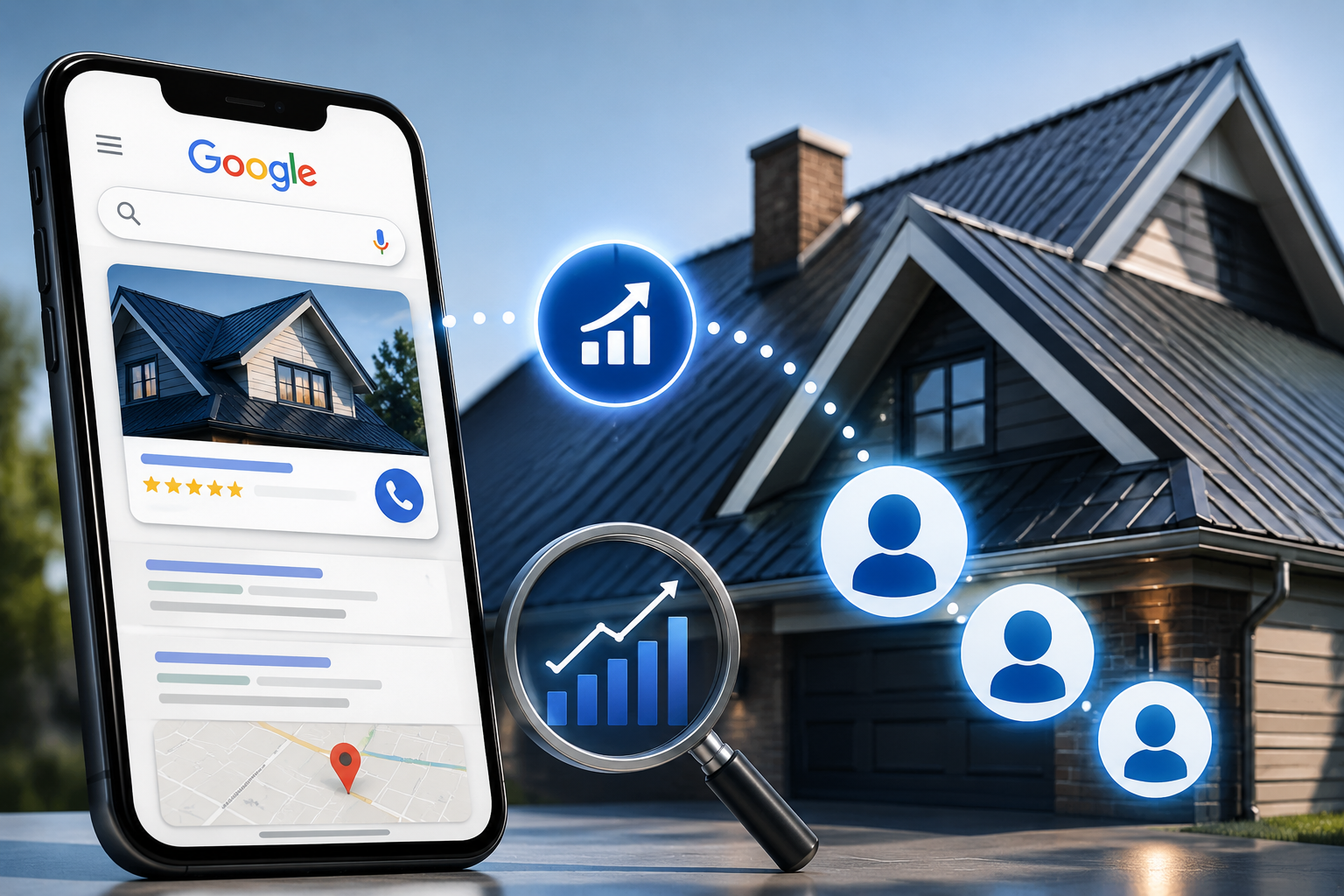
If you are running a roofing business today, I want you to try a quick experiment. Step away from your desktop, pull out your phone, and search for “roof repair near me” or “emergency roofers.”
You will likely see three local map listings, followed by a handful of organic results. If your roofing company isn’t occupying that prime real estate, you aren’t just losing clicks—you are actively handing high-value, exclusive leads to your closest competitors.
The battle for roofing leads is no longer won on a desktop computer. It is won on the five-inch screens inside your customers’ pockets. Let’s dive deep into why mobile SEO is the ultimate catalyst for roofing lead generation and how you can optimize your digital presence to support your local SEO goals.
To understand why mobile SEO matters, you have to understand the psychology of a mobile searcher.
Desktop users are often in the research phase. They might be looking up the average cost of an architectural shingle roof, reading long-form blogs, or checking out structural design trends for a future remodel. They have time on their side.
Mobile users, however, are usually driven by urgency. They are sitting in their living room watching water drip from the ceiling during a heavy storm. Or they just noticed a missing patch of shingles after a high-wind event. They need a professional, and they need one right now.
Because mobile searches inherently carry higher local intent, Google prioritizes proximity, accessibility, and speed. If your website takes too long to load or forces a panicked homeowner to pinch and zoom just to find your phone number, they will hit the “back” button in seconds. This bounce tells Google that your site didn’t solve the user’s problem, damaging your rankings.
Optimizing for mobile isn’t just about making your desktop site look smaller. It requires a strategic approach to technical performance and local visibility. If you want to transform your website into a lead-generation machine, focus on these core pillars:
When a homeowner has a leaking roof, every second counts. If your mobile site takes longer than three seconds to load, over half of your visitors will abandon it. Google uses Core Web Vitals—specific metrics measuring loading performance, visual stability, and interaction speed—as a direct ranking factor.
A truly responsive design automatically adapts to any screen size. But you need to take it a step further and ensure it is “thumb-friendly.” Your call-to-action (CTA) buttons should be large enough (at least 48×48 pixels) to tap easily without accidentally hitting something else.
On mobile devices, the Google Map Pack occupies the entire first screen of search results, completely overshadowing traditional organic listings. Managing your GBP is the single most critical component of supporting local SEO.
Search is shifting rapidly. With the rise of Google’s AI Overviews and conversational AI models like Gemini and ChatGPT, the way homeowners find roofing contractors has changed.
AI engines don’t just look for keyword density; they look for authority, context, and semantic relevance. They synthesize information from across the web to answer complex user queries like, “Who is the best-rated commercial roofer near me that handles metal roofs and offers financing?”
To ensure your business gets cited as a trusted source in these AI-generated answers, you need to structure your content naturally. Use clear, conversational headings that mimic how people actually speak into their voice search assistants. Partnering with dedicated Roofing SEO Experts ensures your website’s architecture and content are optimized for these next-generation semantic search algorithms, keeping you ahead of the curve.
In local search, Google relies heavily on three core pillars: Relevance, Distance, and Prominence. To capture maximum mobile traffic, you must explicitly signal to search engines exactly which neighborhoods, suburbs, and commercial zones your crews service.
Use the interactive local coverage analyzer below to map out your primary target areas and see how well your current content supports local keyword intent.
When you successfully execute a mobile-first approach, your lead generation undergoes a massive shift from passive to active.
If managing the technical nuances of mobile optimization, schema markup, and local algorithm changes feels overwhelming while you are trying to run a crew, it may be time to seek professional help. Investing in tailored Roofing SEO Services allows you to focus on managing your business while digital specialists handle the complex technical strategies required to dominate the search engines.
Don’t let your competitors steal high-value roofing jobs just because their website loads slower or ranks higher on smartphones. Let’s optimize your mobile presence and capture exclusive local leads.
Mobile SEO isn’t a luxury or a future trend—it is the foundational baseline of modern local business survival. Homeowners in your community are looking for your services at this very moment. By optimizing for mobile responsiveness, hyper-local search intent, and the evolving landscape of AI search, you ensure that your roofing company is the one they see, trust, and call.
A: Unlike paid ads, SEO is a long-term investment. While technical mobile fixes can yield quick ranking boosts within a few weeks, consistent, high-quality roofing lead generation typically takes 3 to 6 months of sustained optimization.
A: The biggest mistake is slow loading speeds caused by oversized, uncompressed images of completed roofs. While high-quality project photos build trust, failing to optimize them for mobile completely destroys your site’s performance and search rankings.
A: No, modern web design utilizes a single, responsive website template. A responsive site automatically detects the user’s screen size (desktop, tablet, or smartphone) and seamlessly adjusts the layout, images, and navigation menus to deliver an optimal experience.
A: Mobile users frequently use voice assistants for hands-free searches while driving or multi-tasking. These queries are longer and more conversational (e.g., “Where is a flat roof repair company open now?”), requiring natural, question-based headings on your website.
A: You can manage baseline tasks like updating your Google Business Profile and requesting customer reviews. However, handling deep technical mobile optimization, schema implementation, and keeping pace with evolving AI search algorithms usually requires specialized professional expertise.