
What Is the Best Roofing SEO Strategy for Roofing Companies in 2026?
Aug 24, 2026


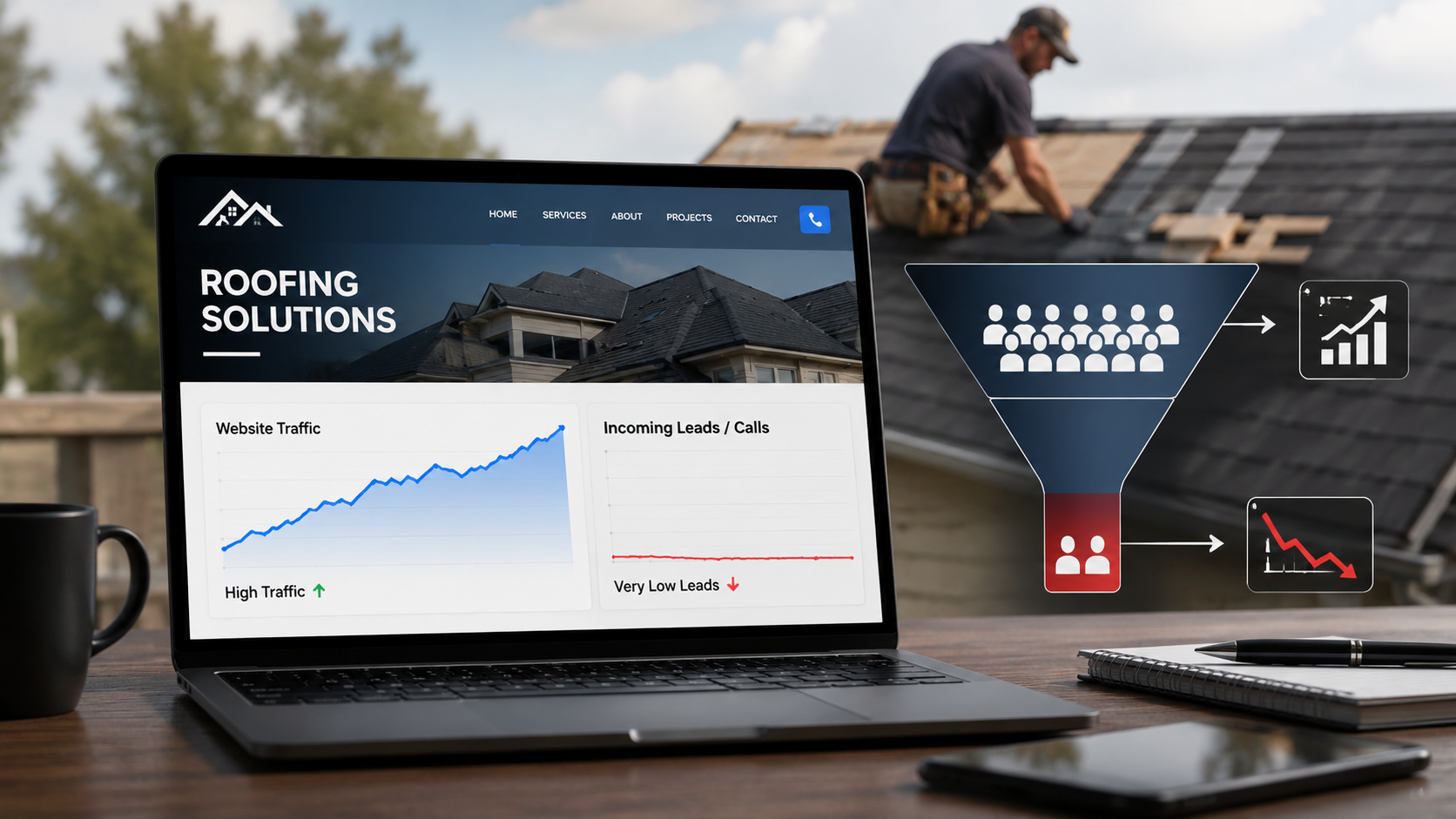
Getting traffic to your roofing website is a positive sign, but traffic alone does not grow your roofing business. If hundreds of people visit your website and very few call, request an estimate, or submit a contact form, something is missing between visibility and conversion.
Your website may be attracting the wrong audience, targeting weak search intent, creating a poor user experience, or failing to build enough trust. In other cases, the problem may be that your pages answer informational questions but do not give visitors a clear reason to take the next step.
The good news is that you do not always need more traffic. Sometimes, you need to make better use of the traffic you already have.
One of the first things you should examine is why people are visiting your website.
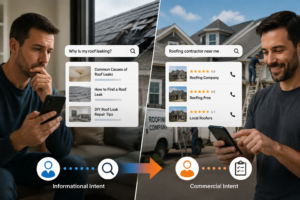
A visitor searching for “how to clean roof gutters” may not be looking for a roofing contractor. Someone searching for “roof replacement contractor near me” has a much stronger commercial intent.
This difference matters.
If your SEO strategy focuses heavily on broad informational keywords, you may generate impressive traffic numbers without generating many qualified leads.
Your roofing content should address different stages of the customer journey:
A strong strategy attracts visitors at each stage while giving high-intent prospects clear opportunities to contact you.
Roofing is a local service. A visitor from another state does not help much if your company only serves a specific service area.
Your website should clearly communicate where you provide roofing services.
Include relevant location information throughout your website without forcing city names into every sentence. Create useful service-area pages when you genuinely serve those locations, and explain the services available in each market.
For example, instead of creating a generic page that repeatedly mentions a city, create useful local content that explains:
This helps search systems and potential customers understand your geographic relevance.
A potential customer should not have to search through your website to understand what you actually do.
Your main roofing services should have dedicated, useful pages where appropriate. These may include:
Each service page should answer the questions a potential customer is likely to have.
What service do you provide?
Who is the service for?
Where do you provide it?
What problems can you solve?
What should the customer do next?
When your pages provide these answers clearly, visitors have less uncertainty and more reasons to contact you.
A visitor can be interested in your roofing service and still leave without contacting you if your website does not provide a clear next step.

A generic “Learn More” button is rarely as compelling as a CTA connected to the customer’s immediate need.
Consider using relevant calls-to-action such as:
Your CTA should appear naturally where the visitor has enough information to make a decision.
Do not force the same CTA into every section. Match the call-to-action to the page and the customer’s intent.
Roofing is a major investment. Before contacting you, potential customers may want evidence that your company is legitimate, experienced, and capable of handling their project.
Your website should make important trust signals easy to find.
Consider including:
Do not simply claim that you are the “best roofing company.” Show evidence that helps customers make an informed decision.
This is especially important when your website competes with established local roofing companies.
Many roofing customers will discover your business while using a smartphone. If your website is difficult to navigate on a small screen, you may lose leads even when your rankings are strong.
Check whether visitors can quickly:
Your website should also load efficiently and provide a straightforward navigation experience.
A beautiful website that makes customers work to find your contact information is still a conversion problem.
Answer Engine Optimization, or AEO, focuses on providing direct, useful answers to the questions people ask during search.
For roofing businesses, this means creating content that answers real customer questions rather than producing articles solely to insert keywords.
You might address questions such as:
Give concise answers first, then provide useful supporting information.
The important part is connecting informational content with relevant services.
For example, an article explaining hail damage can naturally direct a reader toward your storm damage inspection service. This creates a logical path from question → answer → service → contact.
GEO, or Generative Engine Optimization, focuses on making your business information useful and understandable across modern search experiences that generate answers from multiple sources.
For a roofing company, this means building a strong information ecosystem around your:
Your website should consistently explain what you do, where you operate, and the problems you solve.
Local relevance is particularly important. If your website clearly connects your roofing services with the communities you genuinely serve, it becomes easier for both customers and search systems to understand your business context.
GEO should not mean stuffing content with locations or repeating keywords. The goal is to create clear, trustworthy, locally relevant information.
Search behavior is becoming more conversational. Customers may describe a roofing problem in natural language rather than searching for one short keyword.
For example, a homeowner might ask:
“What should I do if I notice a ceiling stain after a heavy storm?”
Your content should be able to address questions like this with practical information.
AI-supported search also makes topical depth more important. Instead of publishing dozens of shallow articles targeting slightly different keywords, build useful content around complete customer problems.
For example, a storm-damage content cluster could cover:
This gives visitors more useful information while establishing stronger topical relevance around your services.
Look at your analytics and identify pages that receive substantial organic traffic but generate few conversions.

These pages deserve special attention.
Ask yourself:
You may discover that improving five existing pages produces more business value than publishing twenty new articles.
This is where conversion-focused Roofing SEO Services for roofing businesses can connect search visibility with the actual business outcomes you care about.
Traffic is an SEO metric. Leads are a business metric.
You should monitor both.
Important conversion indicators include:
Suppose one page receives 5,000 monthly visitors but generates five leads, while another receives 800 visitors and produces 30 leads.
Which page is more valuable?
The second one.
This is why you should avoid judging SEO performance by traffic alone. Your objective should be attracting qualified visitors who have a genuine need for your roofing services.
A professional SEO strategy should connect visibility with customer intent and conversion.
Effective Roofing SEO Services can include:
The purpose is not simply to make your website appear in search results.
It is to help the right customer discover the right service page, find the information they need, trust your business, and take action.
Roofing SEO has industry-specific challenges. A general SEO strategy may not fully address the search behavior, seasonal demand, service categories, local competition, and conversion paths associated with roofing businesses.
Working with a Premier Roofing SEO Company focused on roofing lead generation can help you build a strategy around the complete customer journey.
Instead of asking only, “How can we get more website visitors?” you can ask better questions:
Are we attracting homeowners who actually need our services?
Are our pages answering their questions?
Are we demonstrating enough trust?
Can customers easily contact us?
Which pages generate qualified leads?
That shift from traffic-focused SEO to revenue-focused SEO can make your website much more valuable.
If your website already receives organic traffic, start with the pages that are performing but under-converting.
Use this process:
Find pages that attract visitors but generate few calls or forms.
Make sure the content matches what the visitor actually wants.
Give visitors a clear and relevant next action.
Add genuine reviews, project examples, credentials, and other useful proof.
Clearly explain your service areas and local experience.
Answer questions that could prevent a customer from contacting you.
Connect informational content with relevant roofing service pages.
Ensure phone numbers, forms, and estimate options are easy to find.
Test your website on different mobile devices and screen sizes.
Measure leads and qualified conversions rather than relying on traffic numbers alone.
Getting traffic means your website is being discovered. Getting leads means your website is convincing the right visitors to take action.
If your roofing website receives traffic but produces few leads, do not immediately assume you need more visitors. First examine your search intent, service pages, local relevance, trust signals, CTAs, user experience, and conversion tracking.
A stronger strategy combines SEO visibility with AEO, GEO, AI-supported content planning, and conversion-focused website improvements.
The Roofers SEO helps roofing businesses build a search strategy around visibility, relevance, and lead generation. If your website is attracting visitors but not turning enough of them into potential customers, now is the right time to identify where those opportunities are being lost.
Explore professional roofing SEO and lead-generation solutions and take the next step toward turning more qualified website visitors into roofing opportunities.
Your website may be attracting visitors with low buying intent, targeting the wrong locations, lacking strong CTAs, or failing to establish trust. Review your traffic sources, landing pages, service content, user experience, and conversion paths before focusing only on increasing traffic.
Make your service pages more relevant, use clear CTAs, display genuine trust signals, improve mobile usability, answer customer questions, and make contacting your business simple. You should also track which pages generate qualified leads.
Yes. Effective SEO can attract people actively searching for roofing services. However, rankings and traffic alone do not guarantee leads. Your website also needs strong messaging, relevant service pages, local signals, trust elements, and conversion-focused CTAs.
AEO helps you structure useful answers to questions customers ask during search. When informational content directly addresses roofing problems and connects readers with relevant services, it can support the customer journey from research to service inquiry.
Roofing is primarily a location-based service. Local SEO helps connect your business with customers searching for roofing services in the areas you actually serve. Strong local relevance can improve visibility for valuable service-and-location searches.
GEO, or Generative Engine Optimization, involves making your business information clear, useful, relevant, and trustworthy for modern search experiences. For roofers, this includes strong service information, local context, expertise, customer evidence, and well-structured answers.
You should monitor both, but leads are closer to your actual business objective. High traffic with poor conversion can be less valuable than lower traffic that consistently produces qualified roofing inquiries.
Compare organic traffic with conversion data for individual landing pages. Look for pages with substantial traffic but few calls, forms, or estimate requests. Then review their intent, CTAs, trust signals, content quality, local relevance, and user experience.