
How Can Roofers Rank in Google AI Overviews?
Oct 27, 2026


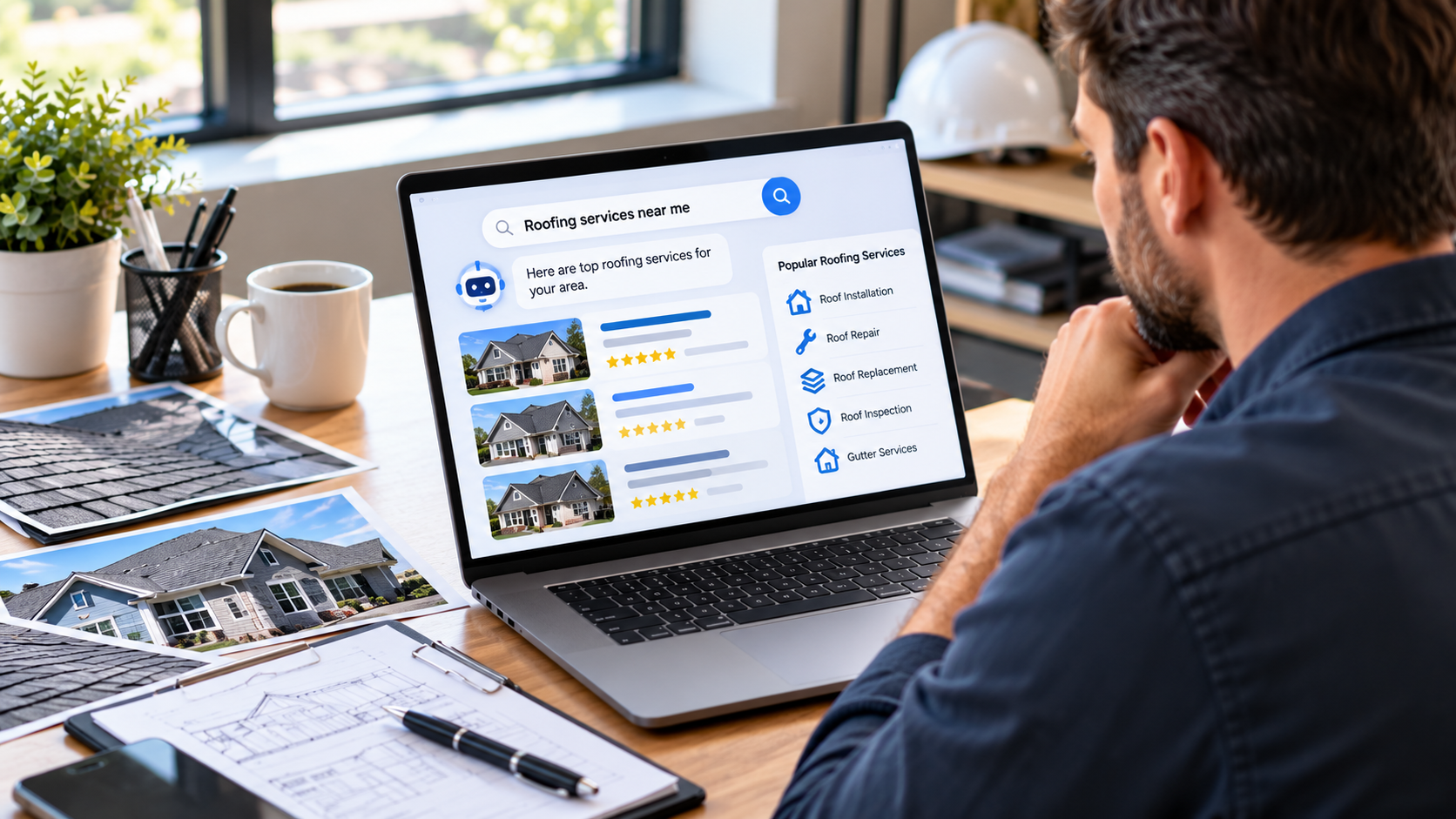
Homeowners may use conversational AI tools to research roof problems, compare contractors, understand replacement options, or identify questions to ask before hiring a roofing company. Instead of searching with a few keywords, they may describe a complete situation and request recommendations or a step-by-step explanation.
For roofing businesses, this creates another reason to maintain a clear, helpful, and trustworthy online presence. However, there is no guaranteed method to make a company appear in ChatGPT responses. Visibility can depend on the user’s question, available sources, location, and the information the system can access.
A practical Roofing SEO Services strategy for roofing contractors can strengthen the foundations that support discovery: useful website content, consistent business details, relevant local information, and credible proof of expertise. These improvements can benefit both traditional search and customers who use AI to research roofing services.
Not every ChatGPT conversation uses live web search, and responses can differ depending on the user’s question and the features available in that experience. When web search is used, external sources may be consulted and cited. A business might be mentioned, cited, or not appear at all.
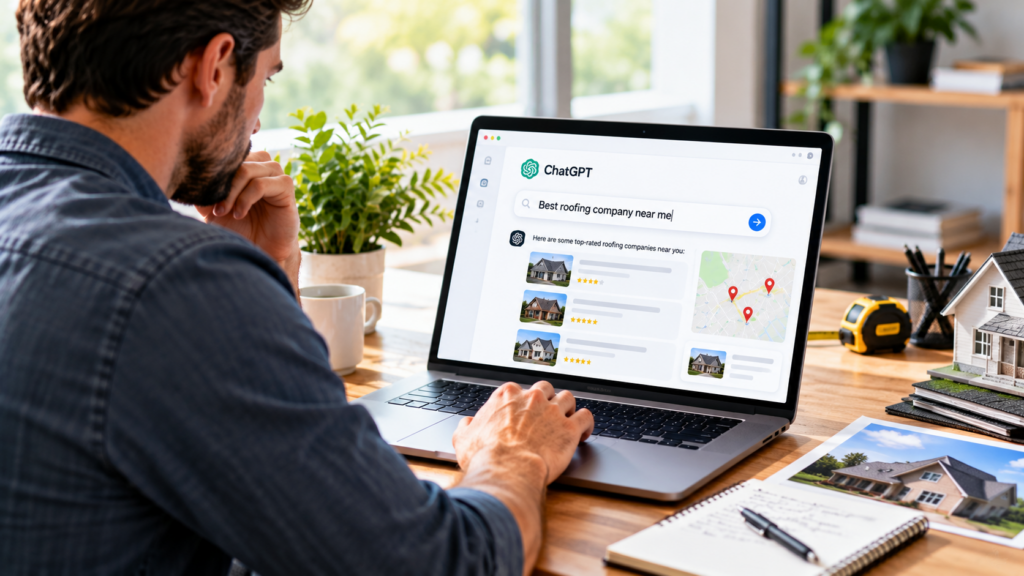
This means your strategy should not depend on a single tactic designed to influence one platform. Focus on making your website a useful, reliable source that answers the questions homeowners are likely to ask.
Your content should clearly explain your services, service areas, experience, and the problems you can help solve. It should also make it easy for visitors to verify your information and contact your team.
Treat ChatGPT visibility as one possible outcome of a wider online presence strategy, not as a ranking position that can be guaranteed.
Conversational searches often contain several connected questions. A homeowner might ask what to do after a hailstorm, how to identify possible roof damage, whether repairs are enough, and what to ask a contractor.
Create content that addresses these practical needs. Useful subjects include:
Start with a clear answer and then explain the details. Use headings, short paragraphs, lists, and examples so the information is easy to follow.
Avoid writing only for an algorithm. If the article does not genuinely help a homeowner understand the problem or make a decision, adding AI-related phrases will not make it valuable.
Homeowners need to know whether a contractor has the experience and capabilities relevant to their project. Your website can support this evaluation through genuine project examples, original images, service descriptions, and transparent company information.
Create case studies that explain the initial problem, inspection findings, work completed, and relevant outcome. For example, a case study about storm damage could describe which roof areas were assessed and why a repair or replacement recommendation was made.
Use accurate details and obtain permission before publishing customer photographs or identifiable project information. Never invent reviews, qualifications, project results, or years of experience.
Where applicable, explain relevant licences, insurance, warranties, and professional credentials accurately. Specific, verifiable information gives potential customers a stronger basis for evaluating your business.
A roofing company may have information spread across its website, Google Business Profile, directories, social profiles, and industry listings. Inconsistent details can confuse customers and make verification more difficult.
Review your online information regularly. Confirm that your business name, phone number, address where applicable, service areas, business hours, and service descriptions are accurate.
Your website should make it clear which locations you serve and which roofing services are available. Build location pages when you can provide meaningful local information, such as relevant project examples or genuine differences in service availability.
Do not create fake addresses or claim to operate in locations where your business has no real service presence. Accurate information supports customer trust and helps search systems interpret your business more consistently.
Want to strengthen your roofing company’s online visibility?
Explore specialized SEO solutions designed for roofing businesses.
A homeowner reading an educational article may need professional help once they understand the problem. Make it easy for them to move from information to the appropriate service page.
For example, a guide about roof leaks can link to your roof repair service. An article about replacement planning can connect to a roof replacement page. A storm damage resource can direct readers to relevant inspection services if your company offers them.
Use descriptive internal links that explain what readers will find at the destination. Keep each link relevant to the surrounding paragraph, and avoid repeating the same destination unnecessarily within an article.
You can also explore how mobile SEO helps roofing companies generate exclusive leads to understand how mobile usability, local visibility, and customer intent connect with lead generation.
Also ensure that your key service pages answer common questions about the process, expected next steps, and how customers can request an estimate.
AI-generated recommendations are not something a business can directly control. However, a credible online reputation helps potential customers assess whether your company is worth contacting.
Encourage honest reviews from real customers. Respond professionally, resolve concerns where possible, and keep your business profiles up to date.
Look for relevant opportunities to demonstrate expertise, such as local community involvement, industry contributions, genuine partnerships, or useful educational resources. A relevant mention from a credible source is more valuable than a large number of unrelated directory listings.
Keep your claims realistic. Do not describe your company as an industry leader, award winner, or certified specialist unless you have evidence to support the statement.
Even strong content can be difficult to discover if the website has technical problems. Review whether important pages can be crawled, whether internal links work, and whether the mobile experience is usable.
Use descriptive page titles, logical headings, accessible navigation, and clear contact information. Ensure that essential service details appear as readable text rather than only inside images.
Where appropriate, use accurate structured data to clarify your organisation, business information, articles, and breadcrumbs. The markup must reflect the visible content and should be validated before deployment.
No technical change guarantees that ChatGPT will cite a particular page. The goal is to maintain a website that search systems can access and interpret while giving visitors a reliable experience.
Is your roofing website ready for AI-driven search?
Discuss your website’s content, technical SEO, and search visibility opportunities.
ChatGPT visibility can be inconsistent. A company may appear for one question and not another, and results may differ between users or locations. Therefore, occasional manual checks should be treated as observations, not definitive rankings.
Develop a small set of relevant questions to monitor, such as those about roofing services in your target areas. Record whether your business or website is mentioned, whether sources are cited, and what type of information appears.
Alongside those checks, measure organic traffic, referral traffic where available, calls, estimate requests, and qualified leads. Ask new customers how they found your business when practical.
These measures help you understand whether your online presence is contributing to real enquiries. If visitors arrive but do not contact you, improve the relevance of the landing page, the clarity of the service information, and the ease of requesting assistance.
No. ChatGPT responses depend on the query, available information, and the search features being used. A business can improve its online presence but cannot guarantee a mention or citation.
No. ChatGPT experiences can differ, and not every response uses live web search. When search is used, responses may draw on online sources and provide citations.
Clear service pages, accurate business information, helpful homeowner guides, genuine project examples, and consistent local details can help communicate what your company does and whom it serves.
No. Content should be accurate, original, useful, and reviewed by someone with relevant knowledge. Publishing large volumes of repetitive or unverified material is not a reliable visibility strategy.
Monitor referral traffic where available, ask customers how they discovered your company, and track calls and estimate requests. Manual checks of relevant prompts can provide additional context but should not replace lead measurement.
Improving ChatGPT search visibility requires more than adding AI-related keywords to your roofing website. Focus on helpful content, genuine experience, accurate business information, strong internal linking, technical accessibility, and a reputation customers can verify.
A well-planned SEO strategy for roofing companies can support discoverability across traditional search and emerging AI-driven experiences without relying on guaranteed placements or shortcuts.
If you want to identify opportunities to improve your website’s search presence and lead generation, contact The Roofers SEO for a tailored roofing SEO strategy.
Ready to improve your roofing website’s visibility?
Discuss your goals and explore an SEO strategy aligned with your roofing services and target market.