

How Can Roofers Rank in Google AI Overviews?
Oct 27, 2026



Homeowners researching roofing work may use search engines, AI-generated answers, online reviews, and contractor websites to decide what to do next. They might ask for an explanation of roof damage, compare repair options, or look for a reliable roofing company in their area.
Generative Engine Optimization (GEO) focuses on making online content easier for generative search experiences to understand, evaluate, and potentially reference. For roofing companies, this means creating reliable information, demonstrating relevant expertise, maintaining consistent business details, and answering questions with clarity.
GEO is not a shortcut around traditional SEO. A roofing website still needs accessible pages, relevant service information, a strong user experience, and credible signals. The most effective Roofing SEO Services strategy connects these foundations with content designed to help real customers.
Traditional SEO helps webpages become discoverable in search results. GEO focuses more specifically on improving the chances that useful information may be surfaced or referenced in generative search experiences.
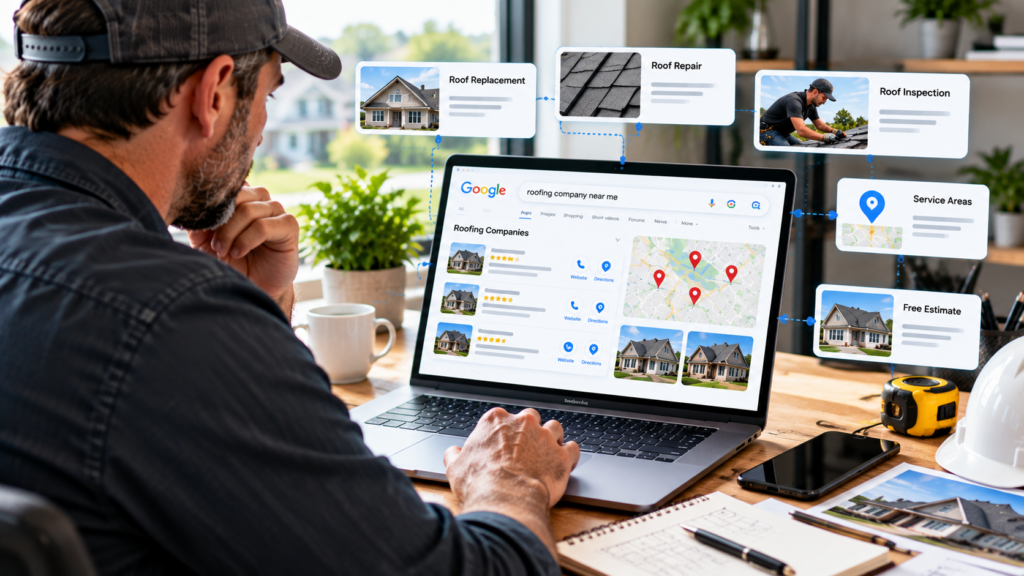
For a roofing contractor, the goal is not to insert AI-related keywords into every page. It is to make the business and its expertise easy to understand.
A well-organised website should answer questions such as:
When those answers are clear and supported by credible information, visitors can evaluate the company more confidently. Search systems also have better context for interpreting the site’s content, although no GEO tactic guarantees a citation.
Generative search experiences often respond to complex questions that require explanation rather than a simple list of keywords. Roofing websites should develop content around the decisions homeowners actually face.
Useful topics include the differences between roof repair and replacement, signs of possible storm damage, common causes of leaks, and factors that affect roofing estimates.
Each page should answer a central question and provide enough detail to help the reader understand the issue. Start with a direct answer, then explain relevant factors, exceptions, and practical next steps.
For example, an article about roof leaks can explain common causes, warning signs, and when a professional assessment may be necessary. It should not claim that a homeowner can always diagnose the problem from a photograph.
Avoid repeating the same information across multiple articles. A smaller collection of comprehensive, well-supported resources can be more valuable than a large collection of shallow pages.
Generative systems can produce broad summaries, so your website needs a clear reason to offer something useful beyond generic information.
Include original project examples, relevant photographs, explanations from experienced roofing professionals, and practical details that reflect your actual services. Explain what was inspected, which problems were identified, and why a particular solution was appropriate—provided the details are accurate and you have permission to share them.
For instance, a case study could explain how a roofing team investigated a leak around a roof penetration and identified the source before recommending repairs. The value comes from describing the real process, not from adding exaggerated claims.
Support factual statements with reliable references when appropriate. Review technical information and remove unsupported statistics, invented testimonials, and claims that cannot be verified.
Informational content should help homeowners understand their options and find the appropriate service when they are ready.
An article about damaged shingles can link to a roof repair page. A guide to roof replacement planning can connect to the replacement service. A storm-preparation article can guide readers to storm damage assistance if the company provides it.
Use descriptive anchor text that explains the destination. Avoid forcing unrelated links into paragraphs simply to increase the number of internal links.
For another perspective on turning search visibility into relevant roofing enquiries, read how mobile SEO drives exclusive roofing leads.
This connection between education and services supports the customer journey: readers learn about a problem, explore the available solution, and can contact the company when they need professional help.
Generative search visibility depends partly on whether a business can be understood accurately. If your website describes one set of services while business listings show different information, customers may find it harder to verify what you offer.
Keep the following details accurate and consistent:
Where applicable, maintain your Google Business Profile and relevant local directories. Correct outdated phone numbers, addresses, service descriptions, and duplicate listings.
Your business identity should also be consistent across service pages, project case studies, and customer-facing profiles. Do not create fake locations or claim to serve areas where you cannot reasonably provide service.
Homeowners often compare multiple contractors before making a decision. They may look for customer experiences, project quality, responsiveness, and evidence that the company delivers what it promises.
Encourage customers to leave honest reviews after completed work. Respond professionally to both positive and negative feedback, and avoid offering incentives in exchange for favourable ratings where platform policies prohibit them.
You can also build credibility through relevant local partnerships, industry participation, useful expert contributions, and genuine business mentions. Prioritise relevance and quality over large quantities of low-value links.
Reviews and mentions should reflect real experiences. Never fabricate testimonials or misrepresent awards, certifications, or project results.
Structured data provides search engines with additional context about eligible content. Depending on the page, appropriate markup may include Organization, LocalBusiness, Article, or BreadcrumbList.
Ensure that every marked-up detail matches the visible page and your actual business information. Validate the implementation and correct errors that may prevent search engines from interpreting it properly.
Do not add irrelevant schema types or assume that markup automatically improves rankings. Structured data is a supporting technical practice, not a replacement for useful content, clear business details, or a credible reputation.
GEO performance can be difficult to measure because generative search experiences vary and may not provide complete reporting about every citation or recommendation.
Use several indicators together:
Record the questions and locations you are monitoring, and repeat checks over time. Do not treat a single appearance or absence as conclusive evidence.
If content receives traffic but generates few enquiries, review whether it answers the visitor’s likely question, connects to a relevant service, and makes the next step clear.
GEO is the practice of improving content and business information so generative search systems can better understand and potentially reference it. It combines useful content, clear structure, credible information, and established SEO foundations.
GEO focuses on generative search experiences, while SEO covers a wider set of practices for organic discovery. They overlap substantially, and a roofing business should generally treat GEO as part of a broader search strategy.
No. Search systems choose which sources to use. Content quality, relevance, trust, competition, and other factors may influence visibility, but no particular outcome is guaranteed.
Develop detailed service pages, useful homeowner guides, genuine project case studies, location-specific information, and direct answers to common roofing questions.
Review important content regularly and whenever services, facts, or recommendations change. Make updates that genuinely improve accuracy, clarity, and usefulness rather than changing dates without adding value.
Make your roofing expertise easier to understand, verify, and discover with a strategy built around useful content and credible business information.