
Why Is Your Roofing Website Getting Traffic but Not Leads?
Aug 31, 2026


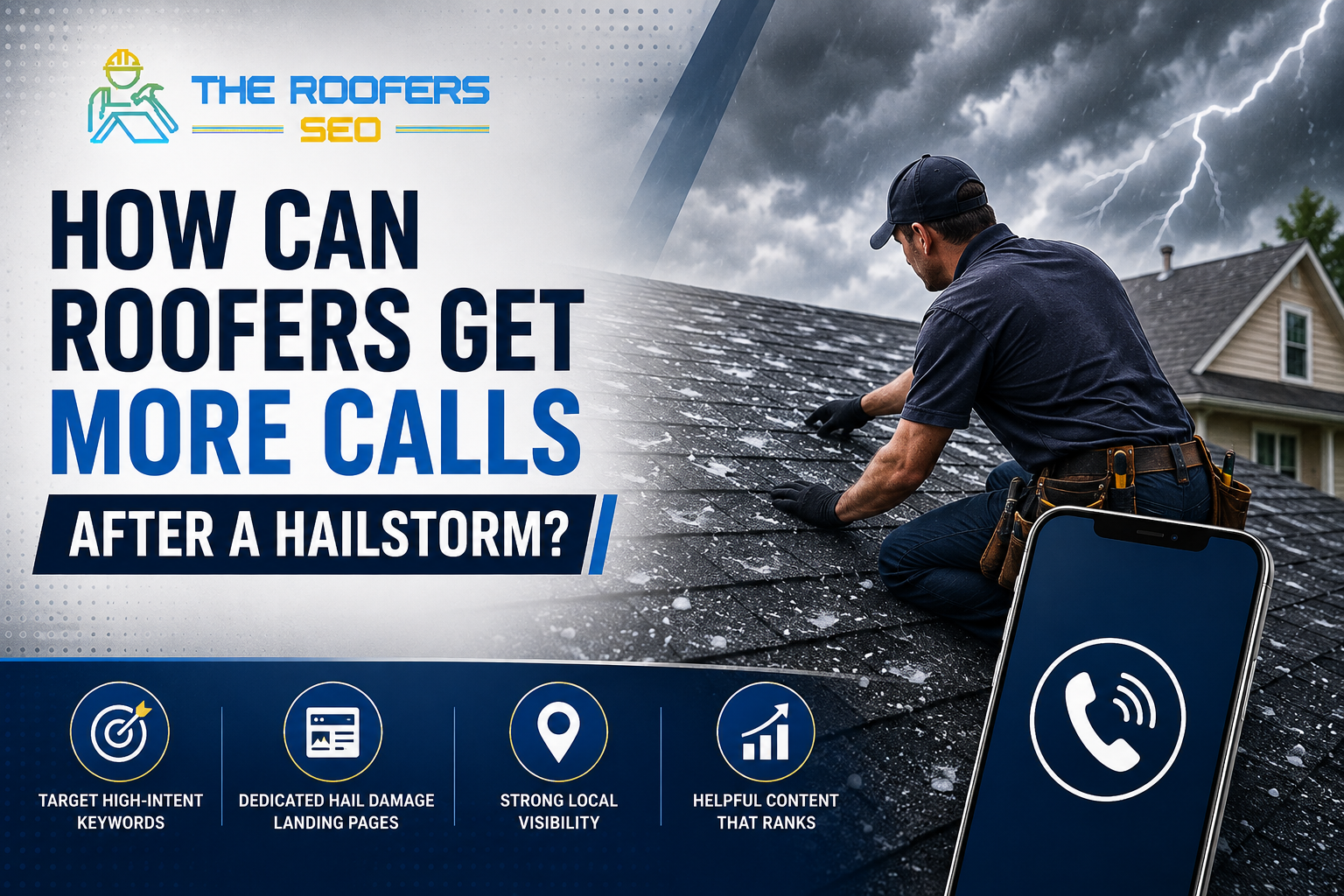
A hailstorm can create an immediate surge in demand for roof inspections, repairs, and replacements. Homeowners who notice dents, cracked shingles, leaks, or other signs of damage often start searching for a roofing contractor quickly. For you as a roofer, this creates a valuable opportunity to use Roofing SEO Services to turn urgent search demand into qualified phone calls.
However, being available after a storm does not automatically mean homeowners will find you. You need the right combination of local visibility, helpful content, strong service pages, trust signals, and conversion-focused website elements.
Here is how you can prepare your roofing business to capture more calls after a hailstorm.
After a severe hailstorm, homeowners want answers quickly. They may search for a roof inspection, emergency repair, or a local contractor who can determine whether their roof has suffered damage.
These searches often have strong commercial intent because the person is already looking for a solution.
For example, homeowners may search for:
If your website and local business presence are optimized around these needs, you have a better opportunity to appear when potential customers are ready to contact a roofer.
One mistake you should avoid is waiting until a hailstorm happens before creating your SEO strategy. Search visibility takes time to build, so your storm-related pages should already exist before demand increases.
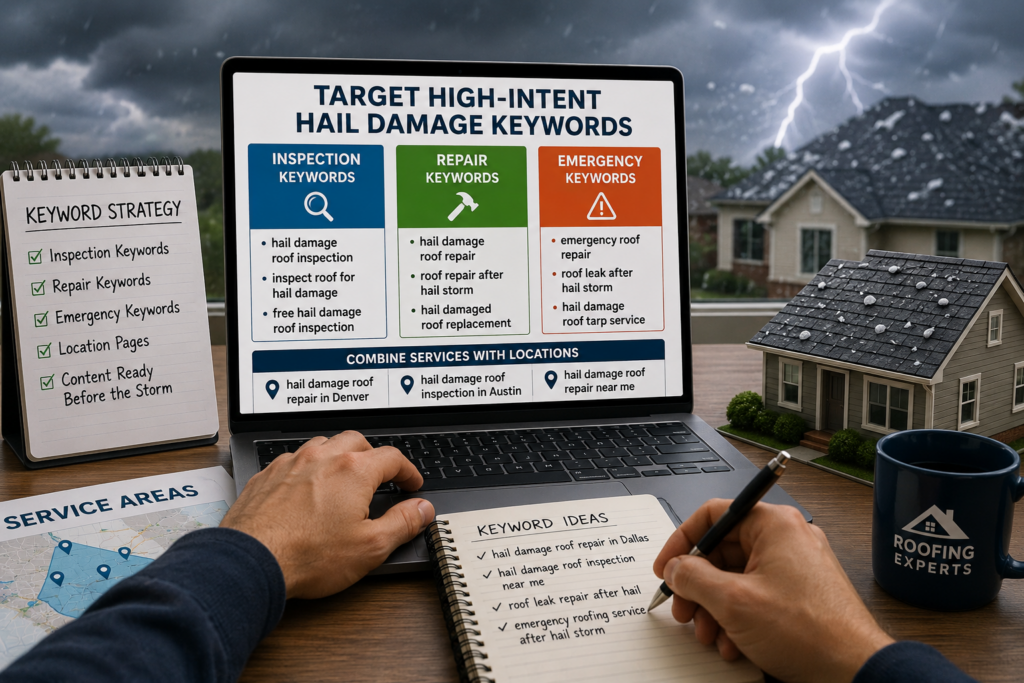
Start by creating keyword groups around different customer intents.
Inspection keywords can target homeowners who are unsure whether their roof has been damaged.
Repair keywords can reach people who already know they need roofing work.
Emergency keywords can capture homeowners dealing with leaks or serious damage.
You should also combine services with locations. For example, instead of targeting only “hail damage roof repair,” you can build content around phrases such as “hail damage roof repair in [city]” or “hail damage roof inspection near [service area].”
This approach helps you connect your services with the people most likely to need them.
Your general roofing service page may not fully address the concerns of someone searching immediately after a hailstorm.
A dedicated hail damage landing page gives you an opportunity to explain exactly what you offer.
Your page should clearly describe:
Most importantly, make it easy for visitors to call you.
Use prominent hail damage roof inspection and emergency roof repair calls to action throughout the page without making the content feel overly promotional.
When homeowners need a roofer quickly, local search visibility becomes especially important. They may search for nearby contractors and compare businesses based on location, reviews, services, and overall credibility.
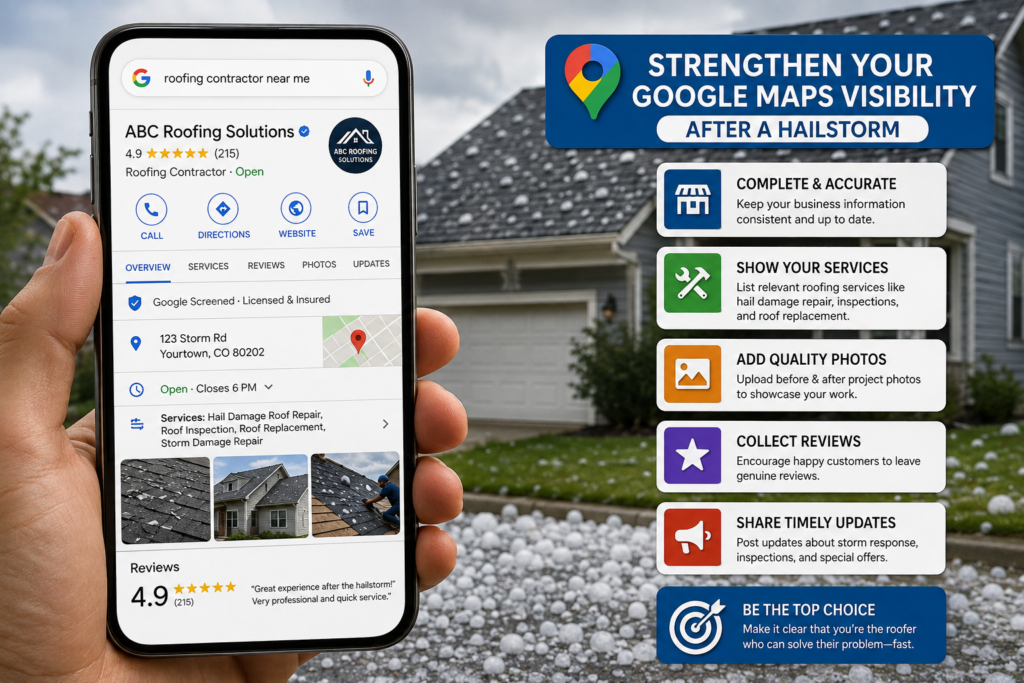
Your Google Business Profile should accurately represent your roofing company and the services you provide.
Keep your business information consistent and make sure your profile includes relevant roofing services. Add high-quality project photos and continue collecting genuine customer reviews.
You can also publish timely updates when appropriate to inform customers about your available services, inspection process, or storm-related roofing assistance.
The goal is to make it immediately clear that your business can help with the problem the customer is searching for.
Timing matters after a major storm.
Instead of publishing only general roofing articles, create useful content that answers the questions homeowners are asking right now.
For example, you could publish articles such as:
This content can support your main service pages while giving potential customers useful information before they make a decision.
You should also make your content location-specific when appropriate. A storm-related article that discusses your local service area can be more useful to nearby homeowners than a completely generic article.
Homeowners often have many questions before calling a roofing contractor.
You can turn those questions into useful FAQ content.
For example:
Do I need a roof inspection after hail?
You may need an inspection even when damage is not obvious. A professional inspection can help identify visible and less obvious signs of hail impact.
How soon should hail damage be repaired?
You should address suspected damage as soon as reasonably possible, particularly if there are signs of leaks or exposed roofing materials.
Can small hail damage cause roof problems?
Yes. Depending on the roofing material and severity of the storm, seemingly minor impact can contribute to roofing problems over time.
If you suspect damage, arranging a professional inspection can help you understand the condition of your roof and determine what work may be necessary.
FAQ content can also strengthen your service pages by addressing customer concerns before they become objections.
After a hailstorm, homeowners may receive offers from multiple roofing contractors. Trust can therefore become a major factor in their decision.
Real project evidence can help.
Show before-and-after photographs, completed roofing projects, inspection examples, and customer experiences where appropriate.
You can also create project-focused content that explains:
This gives prospective customers something concrete to evaluate instead of relying only on promotional claims.
Getting visitors to your website is only one part of the process. You also need to make contacting you easy.
Your website should work smoothly on mobile devices because many homeowners will search for a roofing contractor from their phones.
Make sure your phone number is easy to find and use clickable call buttons where appropriate.
Your landing pages should also load quickly and avoid unnecessary distractions.
Strong calls to action can include:
Keep your forms simple as well. A homeowner dealing with storm damage should not have to complete a long questionnaire before requesting assistance.
A homeowner may compare several roofing companies before making a call. Your online reputation can influence which contractor gets that call.
Encourage satisfied customers to leave genuine reviews about their experiences.
Recent reviews can help demonstrate that your company is actively serving customers. Reviews that naturally discuss professionalism, communication, inspections, repairs, and completed roofing work can also give potential customers more useful information.
Do not rely on reviews alone, though. Combine them with project photos, detailed service pages, local information, and clear contact options to create stronger trust.
You should not judge your storm SEO strategy only by rankings or website traffic.
The more important question is whether your visibility is generating qualified roofing opportunities.
Track metrics such as:
This information helps you identify which pages and strategies are actually contributing to business growth.
If one hail damage page generates significantly more inspection requests than another, you can study what makes it effective and apply those lessons elsewhere.
The best time to build your storm SEO foundation is before the storm arrives.
Create your hail damage pages in advance. Optimize your local presence. Build relevant content. Collect customer reviews. Improve website performance and make your contact process simple.
Then, when a major storm creates new search demand, you are not starting from zero.
You already have pages, content, local signals, and conversion paths that can help you compete for attention.
Preparation also gives you time to improve your strategy based on previous storm seasons.
A strong storm lead strategy requires more than publishing one article after a hailstorm.
Professional Roofing SEO Services can bring together keyword research, local SEO, service-page optimization, content development, technical improvements, conversion optimization, and performance tracking.
The objective is to build a search presence that connects your roofing services with homeowners who are actively looking for help.
As a Premier Roofing SEO Company, your SEO partner should understand that roofing search behavior can change quickly after severe weather. Your strategy should therefore focus on both long-term visibility and opportunities created by seasonal or emergency demand.
The right approach can help you build a stronger digital foundation before storm season and respond more effectively when demand increases.
A hailstorm can create a short window of intense demand for roofing services. To take advantage of it, you need to be visible when homeowners search, provide answers to their immediate questions, demonstrate that they can trust your company, and make contacting you effortless.
Build your hail damage landing pages before storms happen. Target high-intent local keywords. Strengthen your Google Maps presence. Publish useful storm-related content. Show real roofing work. Build your reputation and track the calls and leads your strategy generates.
When you prepare before the storm instead of reacting afterward, you give your roofing business a much stronger opportunity to turn hail damage searches into inspections, calls, and qualified roofing leads.
Need to improve your roofing business’s visibility and generate more qualified leads? Contact The Roofers SEO to discuss a search strategy built around your roofing services and target market.
Focus on local search visibility, hail damage service pages, Google Maps optimization, useful storm-related content, reviews, and clear call-to-action elements that make it easy for homeowners to request an inspection.
Target high-intent phrases related to hail damage roof repair, roof inspection, emergency roofing, local roofing contractors, and location-specific hail damage services.
It can be highly valuable because homeowners often look for nearby roofing contractors when they need an inspection or repair quickly. Accurate business information, services, photos, and genuine reviews can strengthen your local presence.
Yes. A dedicated page allows you to address hail-specific concerns, target relevant search terms, explain your services, show proof of your work, and provide direct options for contacting your company.
You should prepare foundational content before storm season. After a significant storm, update or publish relevant local content quickly while customer demand and search activity are increasing.